Medak – A Journey Through History and Culture

Medak is a historically rich and culturally vibrant district where heritage, spirituality, agriculture, and development come together harmoniously. Home to iconic landmarks such as Medak Fort and Medak Cathedral, the district reflects Telangana’s proud legacy while steadily progressing through education, industry, and community development.
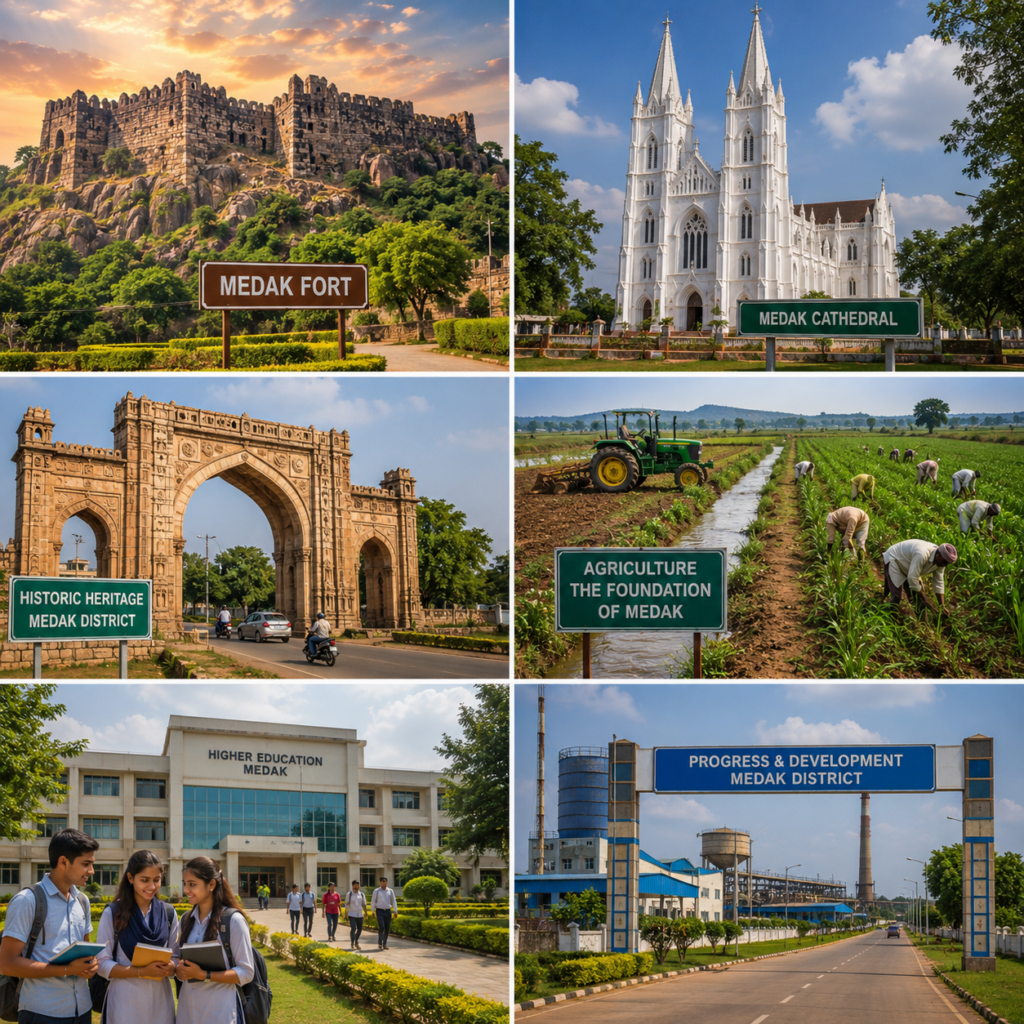
Medak is one of Telangana’s most historically significant and culturally vibrant districts, known for its rich heritage, architectural landmarks, spiritual centers, and scenic landscapes. Located in the northwestern part of the state, Medak has played an important role in the region’s historical, cultural, and socio-economic development. The district’s history is connected to dynasties such as the Kakatiyas, Bahmanis, Qutb Shahis, and Asaf Jahis. Landmarks like Medak Fort and the renowned Medak Cathedral stand as enduring symbols of its heritage and cultural significance.
Beyond its historical importance, Medak is known for its strong agricultural foundation, with farming serving as a primary livelihood for many residents. Fertile lands, irrigation projects, and modern agricultural practices contribute significantly to the district’s economy. Medak has also experienced growth in education, infrastructure, and industrial development, creating opportunities for employment and progress. The district is home to several educational institutions that support learning and skill development, helping prepare future generations for success.
Statistical Profile of | Medak
AREA
≈ 2,748 sq. km
Medak is a historically significant district spread across vast agricultural lands, heritage sites, forests, and growing urban centers.
POPULATION
≈ 8 Lakhs
A thriving district with a diverse population, known for its strong cultural roots and agricultural economy.
LANGUAGE
Telugu & Urdu
Telugu is the primary language spoken in Medak, while Urdu and English are also commonly used.
ECONOMIC BASE
Agriculture
Agriculture forms the backbone of Medak's economy, supported by growing industries and manufacturing units.
District Overview
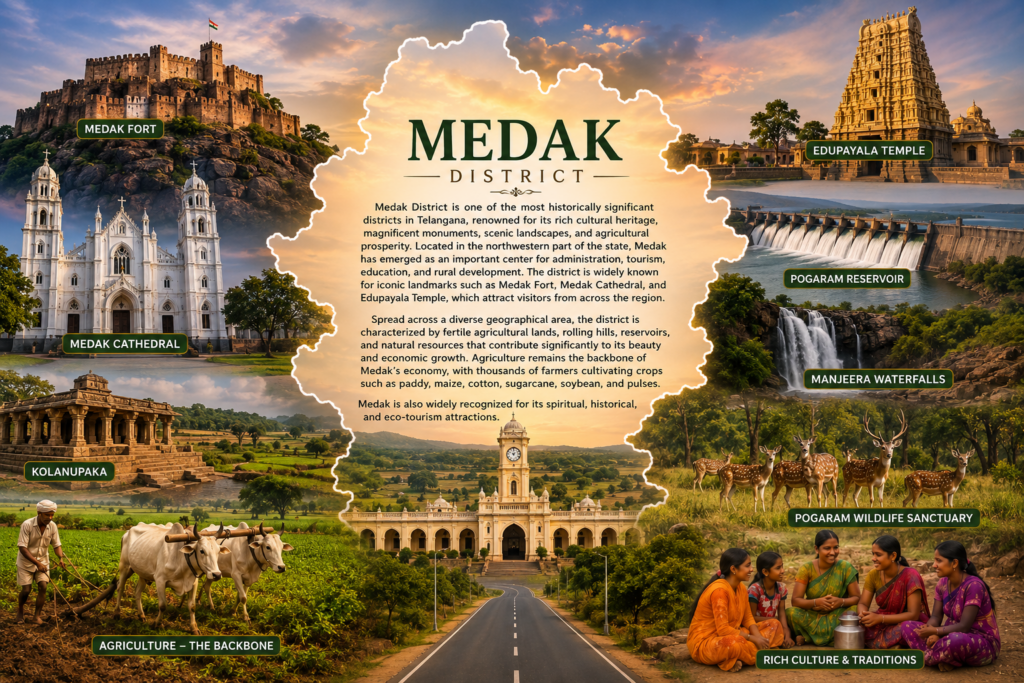
MMedak District is one of the most historically significant districts in Telangana, renowned for its rich cultural heritage, magnificent monuments, scenic landscapes, and agricultural prosperity. Located in the northwestern part of the state, Medak has emerged as an important center for administration, tourism, education, and rural development. The district is widely known for iconic landmarks such as Medak Fort, Medak Cathedral, and Edupayala Temple, which attract visitors from across the region.Spread across a diverse geographical area, the district is characterized by fertile agricultural lands, rolling hills, reservoirs, and natural resources that contribute significantly to its beauty and economic growth. Agriculture remains the backbone of Medak’s economy, with thousands of farmers cultivating crops such as paddy, maize, cotton, sugarcane, soybean, and pulses. Medak is also widely recognized for its spiritual, historical, and eco-tourism attractions.
Total Towns
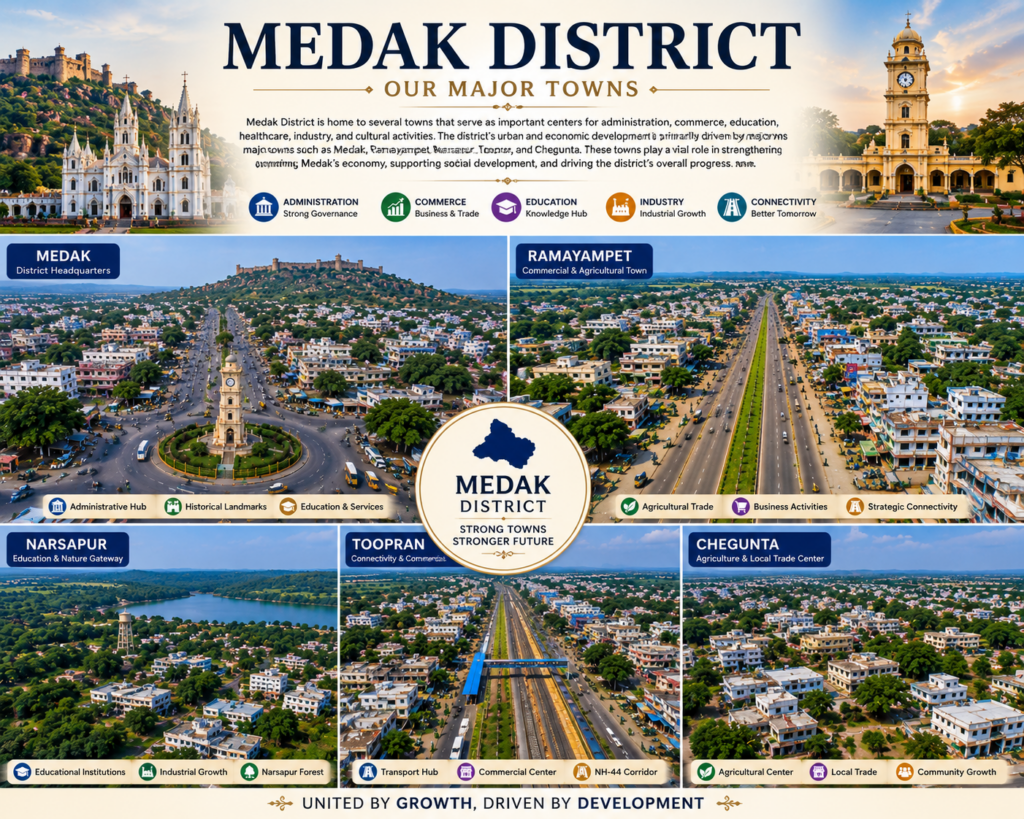
Medak District is home to several towns that serve as important centers for administration, commerce, education, healthcare, industry, and cultural activities. The district’s urban and economic development is primarily driven by major towns such as Medak, Ramayampet, Narsapur, Toopran, and Chegunta. Medak, the district headquarters, functions as the administrative and historical center of the region, known for landmarks such as Medak Fort and Medak Cathedral. Ramayampet is an important commercial town recognized for its agricultural trade, business activities, and strategic connectivity along major transportation routes. Narsapur is well known for its educational institutions, industrial growth, and the scenic Narsapur Forest area, which attracts nature enthusiasts. Toopran serves as a key transportation and commercial hub due to its location on the Hyderabad–Nagpur corridor, while Chegunta contributes significantly to agriculture and local trade.
Population Chart
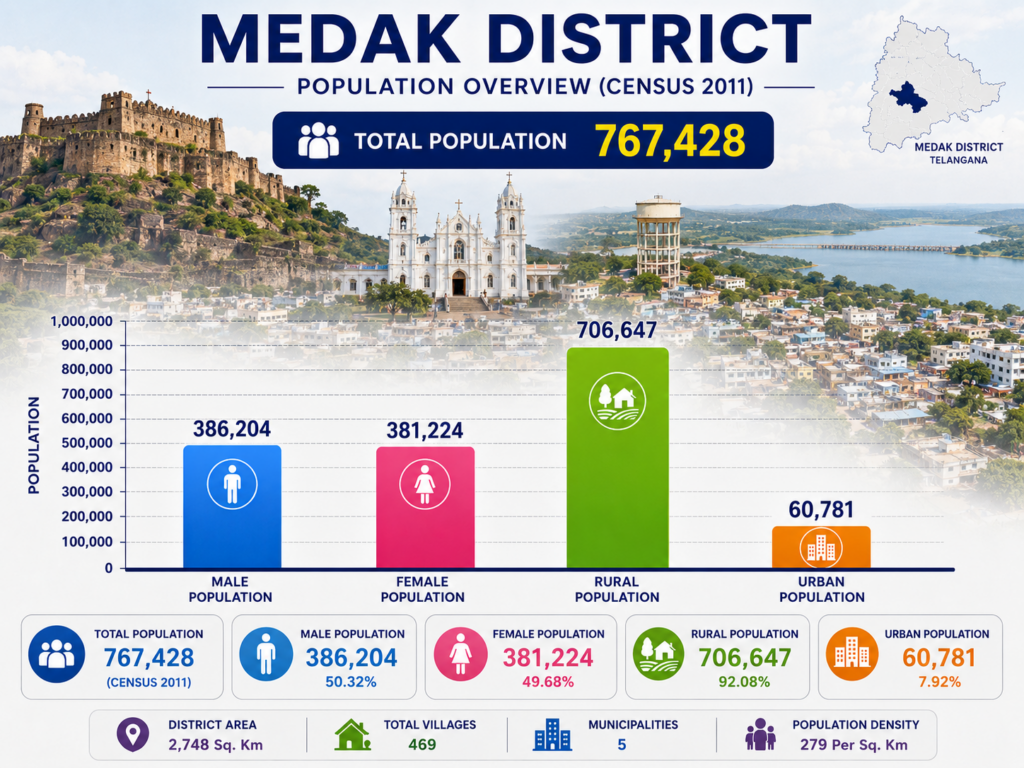
The Population Chart provides a visual representation of the demographic profile of Medak District based on Census data. It highlights the total population along with the distribution between male and female residents, as well as the rural and urban population segments. The chart clearly indicates that a large proportion of the district’s population resides in rural areas, reflecting Medak’s strong agricultural economy and village-centered way of life. At the same time, urban centers such as Medak, Ramayampet, Narsapur, Toopran, and Chegunta contribute to a steadily growing urban population due to improvements in infrastructure, education, commerce, and employment opportunities.The chart also demonstrates a balanced gender distribution, showcasing demographic stability and social development across the district.Understanding these demographic trends is essential for supporting sustainable development and improving the quality of life for residents throughout the district.
Measurements Data
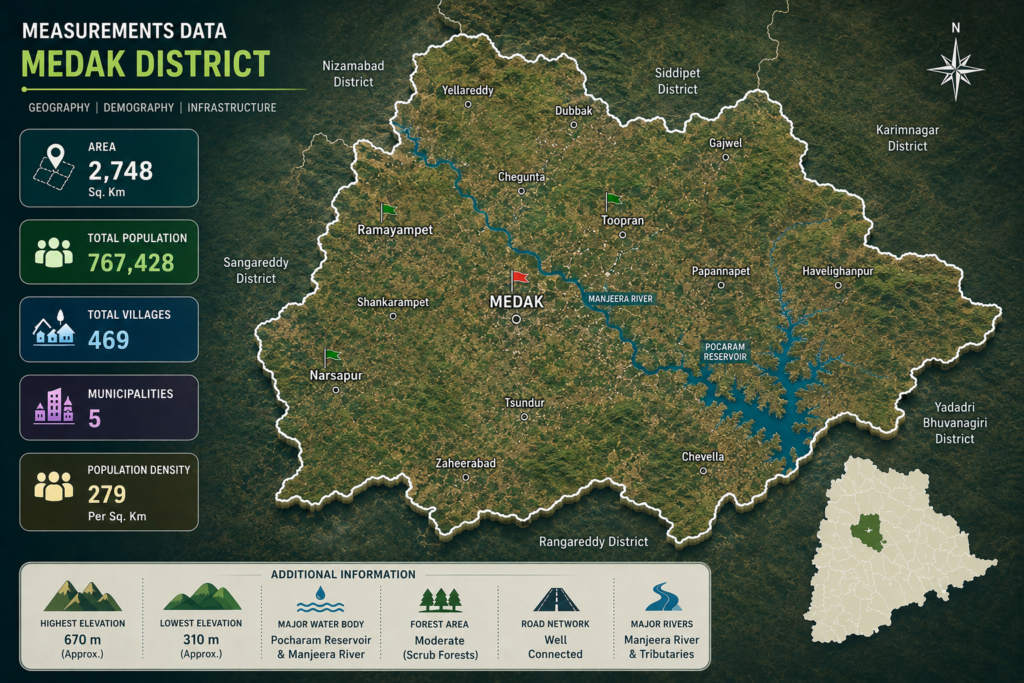
Medak District covers a significant geographical area and is one of the historically important districts in Telangana. The district spans approximately 2,748 square kilometers, comprising a diverse landscape of fertile agricultural lands, rolling hills, reservoirs, forests, and rural settlements. Its strategic location near Hyderabad and well-developed road connectivity contribute significantly to its economic, agricultural, and industrial growth.The district is characterized by productive farmlands and important water resources such as the Manjeera River, Pocharam Reservoir, and several irrigation tanks that support agriculture and drinking water needs. These natural resources play a vital role in sustaining the district’s agricultural economy and enhancing its environmental significance.
Previous History
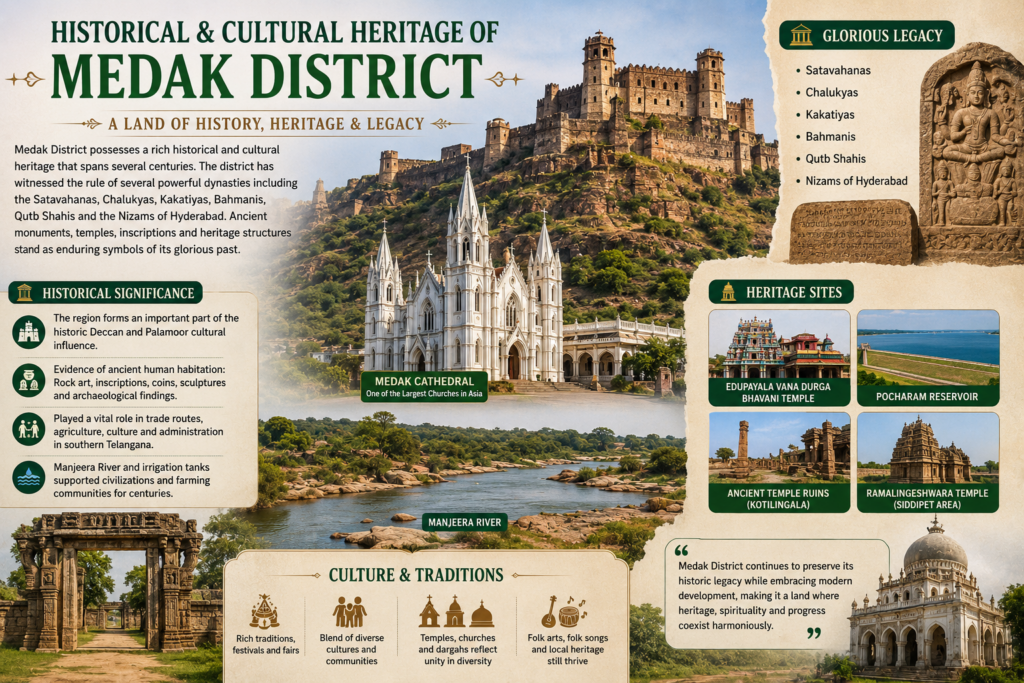
Medak District possesses a rich historical and cultural heritage that spans several centuries and reflects the legacy of some of the most influential dynasties in the Deccan region. The district has witnessed the rule of the Satavahanas, Chalukyas, Kakatiyas, Bahmanis, Qutb Shahis, and the Nizams of Hyderabad, all of whom contributed to its architectural, cultural, and administrative development. Historical monuments such as the Medak Fort, ancient temples, inscriptions, and heritage structures stand as enduring symbols of the district’s historical significance and vibrant past.The district has long served as an important center of cultural, religious, and economic activity in Telangana. The iconic Medak Cathedral, one of the largest churches in Asia, along with the renowned Edupayala Vana Durga Bhavani Temple, attracts thousands of visitors and pilgrims every year. Fertile agricultural lands nourished by the Manjeera River and numerous irrigation reservoirs have supported farming communities for generations.